Does the work
Builds the technical proposal in the company's template — the work that took a person days.
What the operation knows lives in ERP, MES, spreadsheets and people's heads. KORE brings it together — and the AI reads, acts and records every step.

Kris reads the document, the form, the photo and the audio, does the work and hands it back for you to confirm — always with the permission of whoever triggers it, and with every action recorded.
Builds the technical proposal in the company's template — the work that took a person days.
Sees the swapped value on the form the moment it's typed — and flags it before it becomes rework or a nonconformity.
Spots the cleaning check nobody logged on the production order.
Document, form, task, work order — Kris reaches each one. And every step lands in a history that proves it.
The operation's software — the ERP, the MES, the maintenance system — stores what the operation already did and hands you back the work of filling it in: it's an archive. KORE does the work — reads the audio, the photo, the form, the standard — and you just confirm. It's the judgment of those who understand it best, applied across the whole operation at the same time — something no person can do.
of generative AI pilots delivered no return at all. An assistant that only answers questions doesn't change the operation — what changes it is AI that acts inside the process, with permissions and a record.
Software records what's already past. KORE does the work now, while the operation is happening.
Kris always acts within the permissions of the user who triggered it — never on its own, never beyond what's authorized.
Every action lands in a permanent record: who asked, what was done and when. Audit-ready.
Brazilian industry is living through a shortage of skilled labor, shorter shift schedules — producing more in fewer hours — and critical knowledge locked in the heads of a few specialists, who retire and take it with them. That judgment doesn't scale — and when it's missing, the bill comes due in two ways.
of industrial companies report a shortage of skilled workers
An all-time high for the series — it was 5% in 2020.
A customer asks for a quote. The specialist reads the documentation, fills the technical form, builds the proposal and prices it item by item. Half the sales cycle runs through one head. When that person is out — or when whoever steps in lacks the same instinct — the error enters the proposal and becomes rework, and no one with judgment was beside it to catch it in time.
In a production order, the sequence is sanitize the line, mark the check, clean, mark the check. The cleaning check was never logged — someone forgot, or the system didn't generate it. The order moved on anyway. Nobody saw the hole; it only surfaced later as a nonconformity in the batch, with the loss and the audit that follow. Here no one is making a mistake — a step that should have happened didn't, and no one was watching.
Both faces share one root: the judgment of those who know wasn't present — neither beside the person doing the work, nor watching for what was missed. That is exactly where KORE belongs.
standard, SOP, drawing, contract, licence
on the shift, on the line, in the field, on site
with author, timestamp and version — for the auditor and for the customer
Where this anatomy shows up in your operation
nonconformity · corrective action · incoming inspection · PPM
preventive · work order · instrument calibration
work permit · toolbox talk · risk assessment · near miss
licence condition · waste · monitoring
datasheet · specification · estimate · bill of materials
quoting · supplier qualification and approval
SOP · work instruction · competency matrix
ISO · IATF · GMP · safety regulations — evidence ready, not a scramble
Today each of those lives in a spreadsheet, on paper or in an email — and the cost shows up as a sum. Poor quality eats 15 to 20% of sales, and hidden costs run 4× the visible ones precisely because nobody tracks them together. (ASQ)
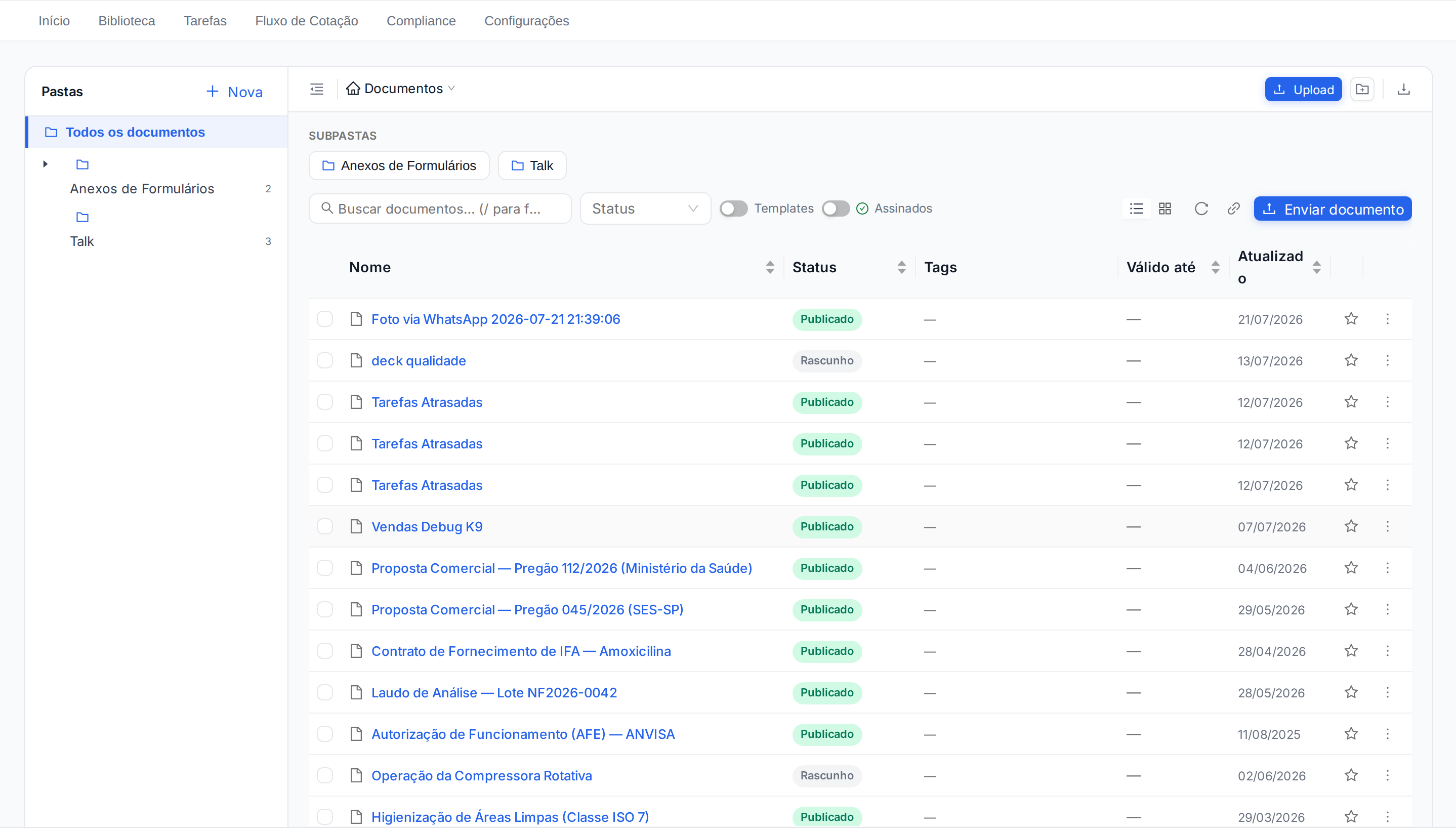
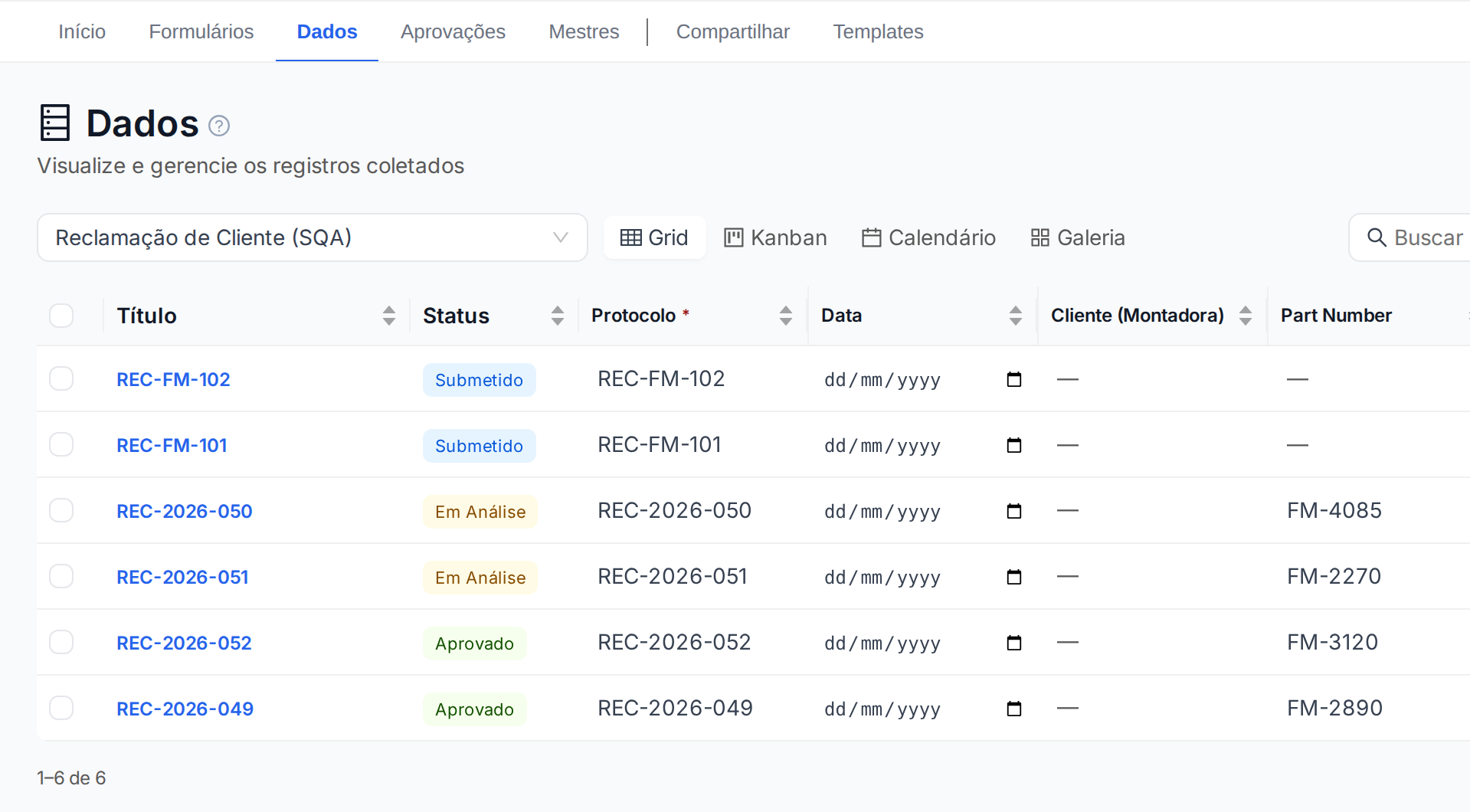
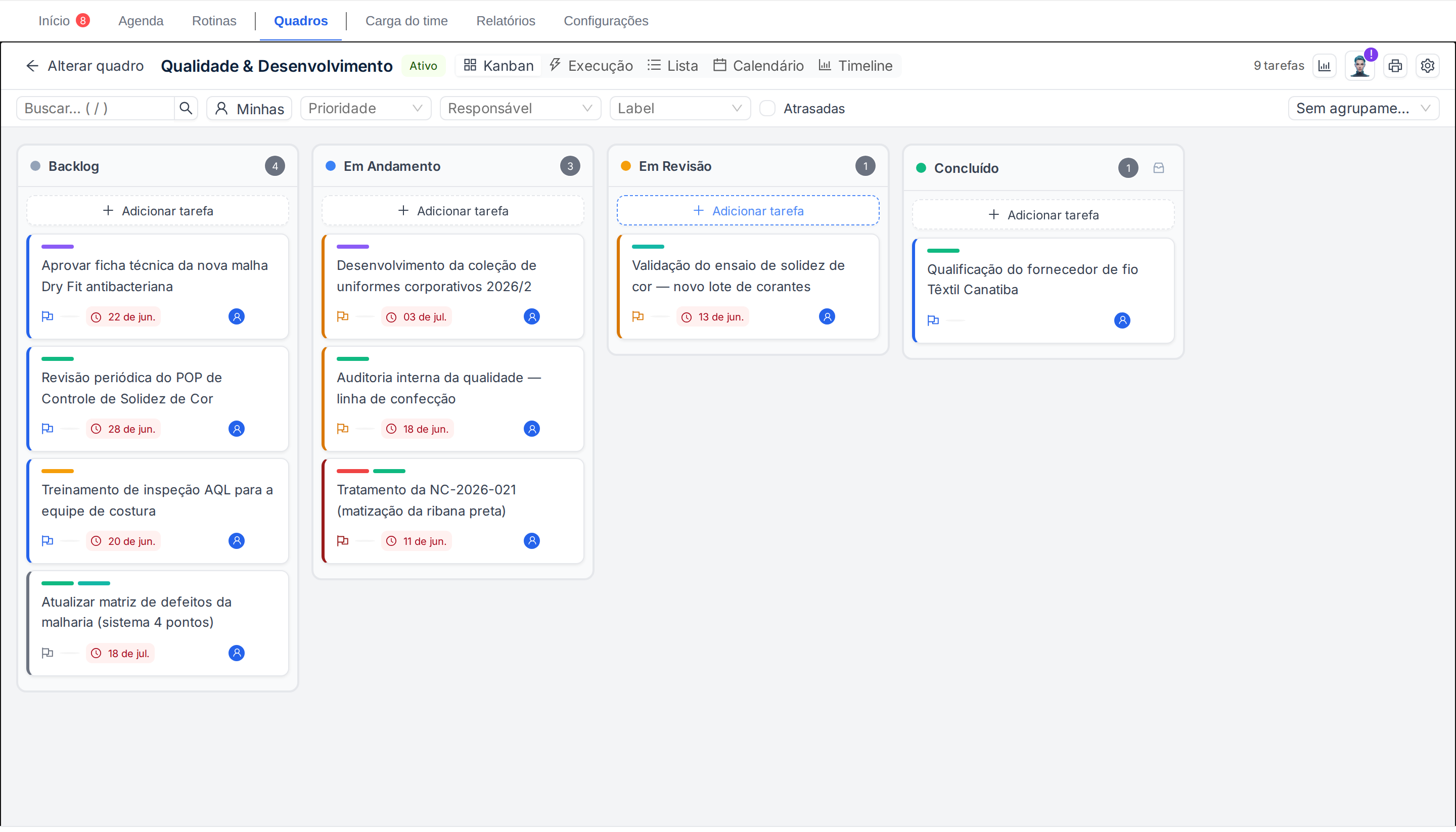
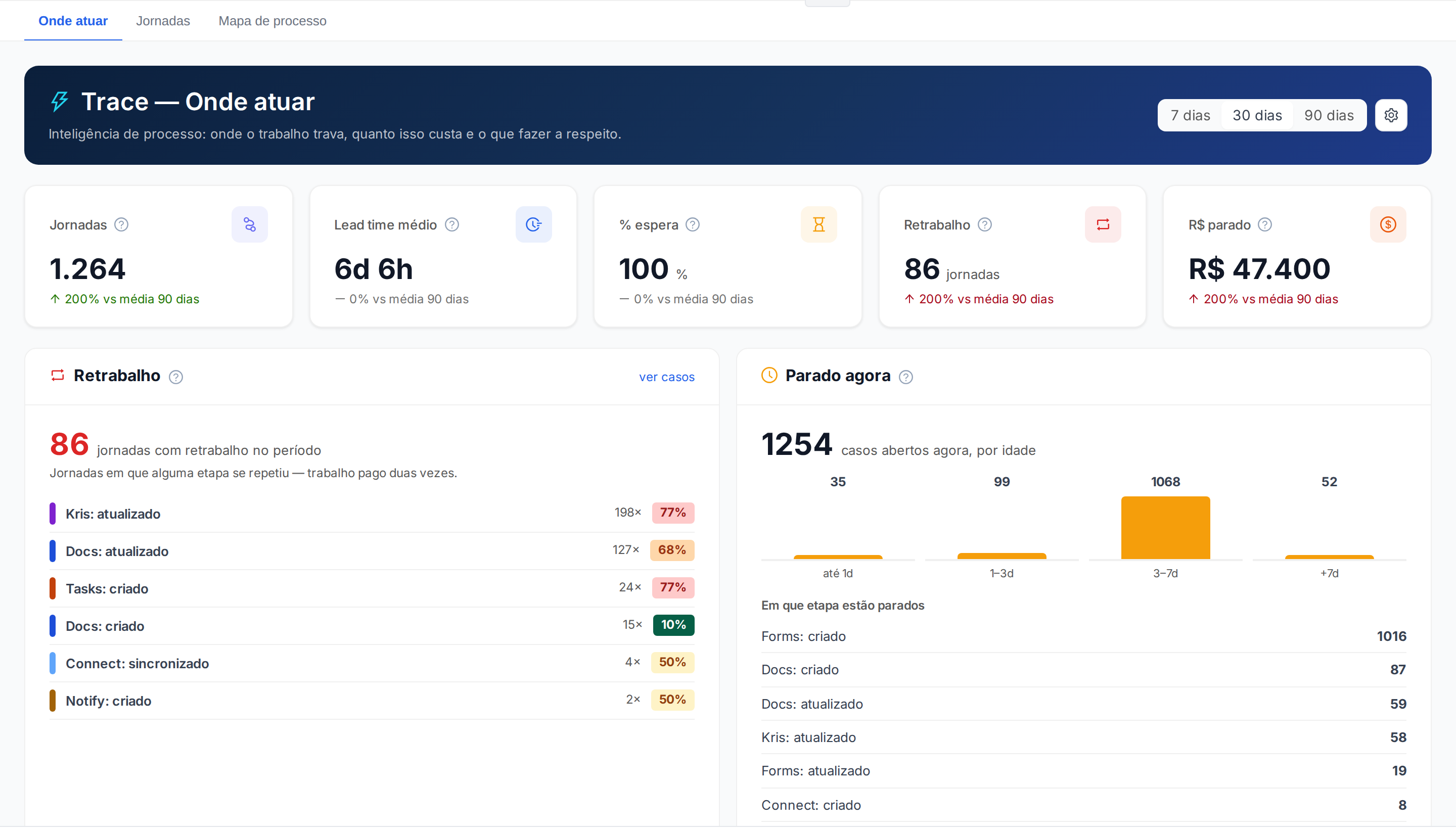
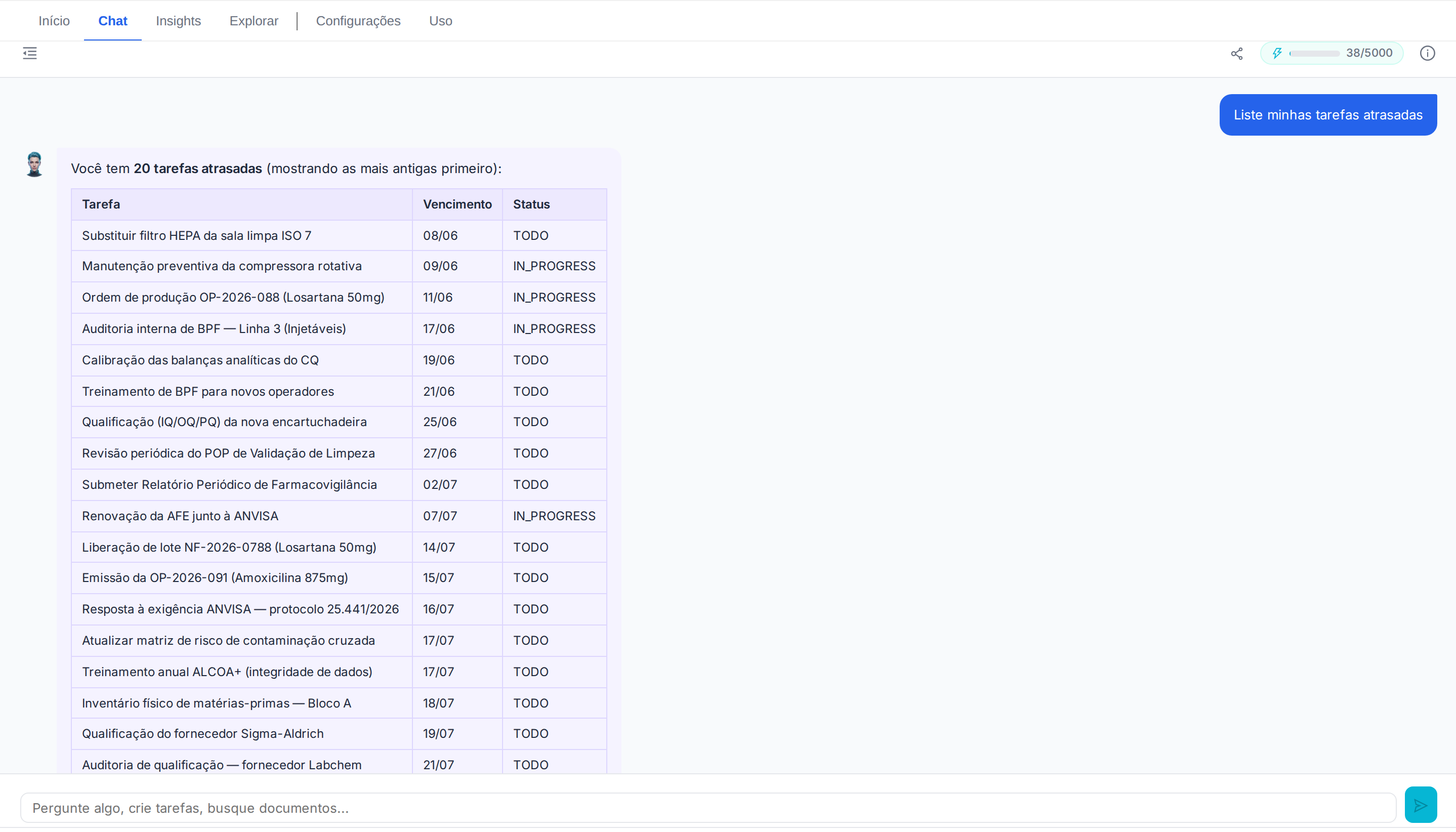
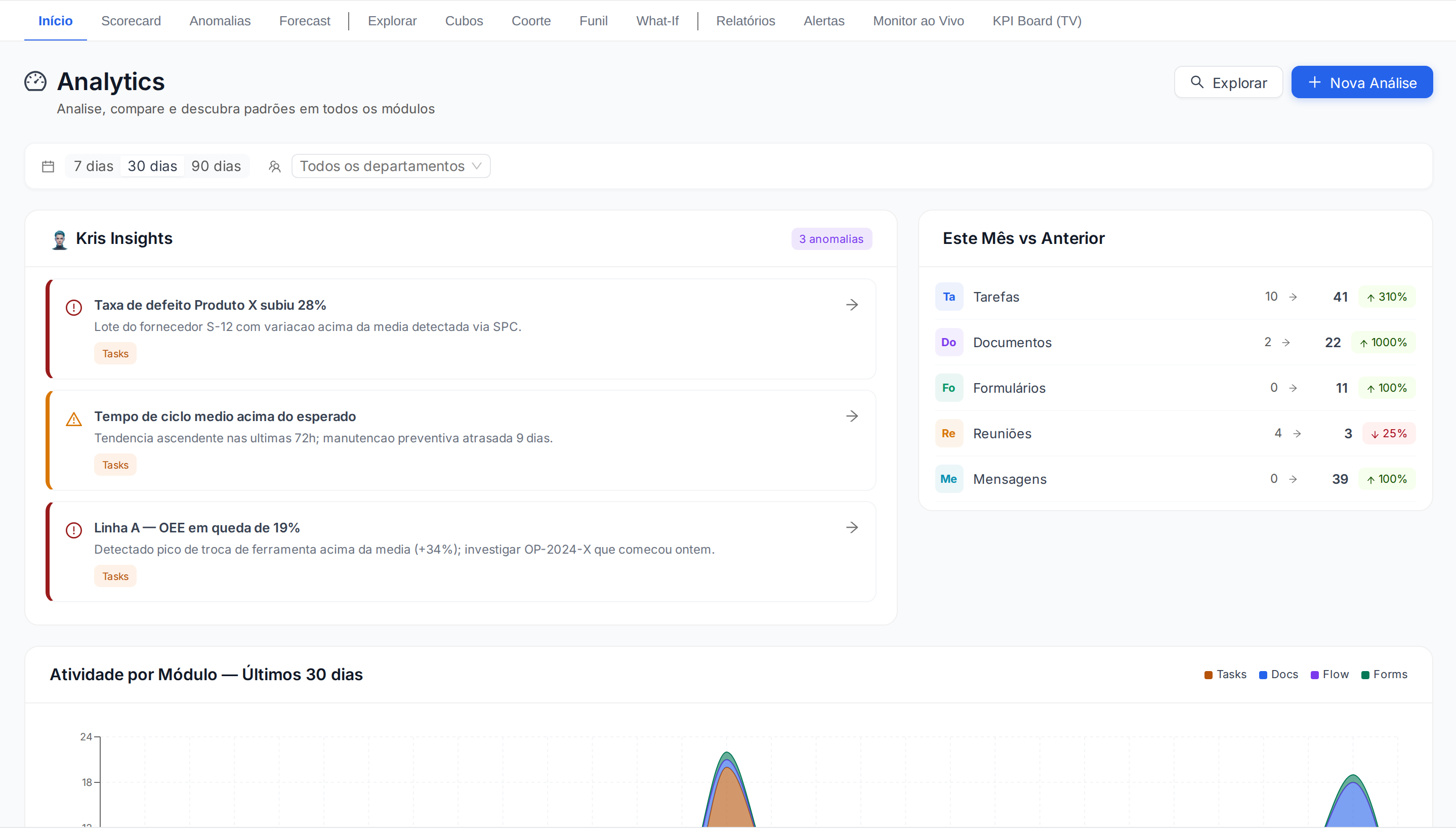
Captures from the demonstration environment — the same product and the same modules that go into your operation.
 The platform
 All the operation's knowledge — documents, forms, tasks, conversations, system data — in one place. There are twelve modules, and one of them is Kris: the AI that works inside the other eleven, applying judgment where the work happens. You activate only what you need — and every step stays recorded.
An operator sends a photo and an audio through the channel the plant already uses. In ~1.2 seconds KORE understands, classifies, opens the work order in the ERP and alerts the maintainer — all recorded. Below, a real example of the work getting done.
The operator photographs the defect, describes it by voice, attaches the work order. The same AI reads all four formats and structures what matters.
Kris classifies the symptom and proposes the action. You confirm — and then it opens the work order in your ERP and calls the shift mechanic. Real action in the system, with your permission.
WhatsApp, Teams, Slack, bench tablet, terminal. The intelligence is the same on all of them — the channel is just where the conversation happens.
Every step recorded: who asked, what the AI did, when, under which permission. Everything stays recorded, audit-ready.
The confirmation respects the permission level of whoever confirms.
Platform and records run wherever you choose — on your server or in the cloud managed by F7. Only the slice the task needs goes to the model, encrypted and logged.
Document, form, inspection, photo, audio, conversation — the work that never logs into the ERP and today gets settled over personal WhatsApp and phone calls. That's where Kris operates, with role-based permissions and every action audited.
They speak, Kris records — inspection, incident, reading. In their own words, with nobody trained on a new system: the data is born digital instead of becoming paper and being retyped later. And the veteran's know-how is on record before they retire.
The platform points to the bottleneck and the money sitting idle without a process mining project: it reads the work already happening inside it.
Every action with author, timestamp and version. The evidence is already there when the auditor arrives — it isn't a report we generate afterwards.
To act, Kris talks to the systems the plant already uses — the ERP, the shop floor, everything. And it does so without taking any password out of your company: what's yours stays yours.
What KORE connects
The platform runs inside your company. Documents, history and data are stored on your premises, with role-based permissions and an audit trail of every access — industrial secrets, personal data and operational continuity under your control: if the internet goes down, the operation keeps running.
F7 takes care of everything; you just access it through the browser, with no infrastructure of your own. Every customer has their own environment, kept separate — no mixing with anyone.
How it's sold
By module, by user and by the size of the operation. It enters through one pain and grows as the company adopts it — deployment is configuration, not a software project.
Kris is new — it's being introduced now. The experience behind it is not. For over a decade the same team has automated industry in real operations, with measured results.
“Now I can follow the production tasks and make sure everything is being done properly through my tablet or phone.”
Regulatory activity control moved from notebook to screen with filters · workdays recovered in the directors' routine.
Martha Lorenzi · Director · Quinabra
Read full case“There were 30 executives the days I spent with them, soon after they reached 70. I take pride in the rollout we delivered at Cervejaria Proibida — the gain there was absurd.”
Commercial agreements with no physical travel · BRL 6,450/week saved · operation scaled 30 → 70 executives without breaking the process.
Julio Godoi · former Commercial Director at F7 · on the project delivered to Cervejaria Proibida
Read full case“We were definitely able to optimize at least 50% of the time, mainly thanks to centralized communication and managing activities according to the queue order.”
A single automated process · BRL 35,000/year saved · history, queue and approval flow where there used to be only emails.
Renan Almeida · IT Manager · Degraus Aluguéis de Equipamentos
Read full caseOther testimonials from the same base
"Our sector involves a lot of documentation, both ours and from our customers. The arrival of Dynamique reduced physical document movement by 87% and made internal controls and audits much easier."
"Dynamique digitized our processes enabling much greater speed and fluidity. Our communication with members and residents became much faster."
A process that eats half the time of your expensive people — quoting, inspecting, documenting — done by hand, with no trail, that only one or two people know how to run. When they're out, the process stops. When they retire, the knowledge leaves with them.
KORE takes on the manual work: reads the document, applies the judgment, delivers the result. The senior person stops being the bottleneck — they review and decide instead of executing by hand. Their judgment, once stuck at one desk, now pays off across the whole operation.
You choose the process that hurts most. We build on your document, your form and your systems — and you see it working before deciding anything.